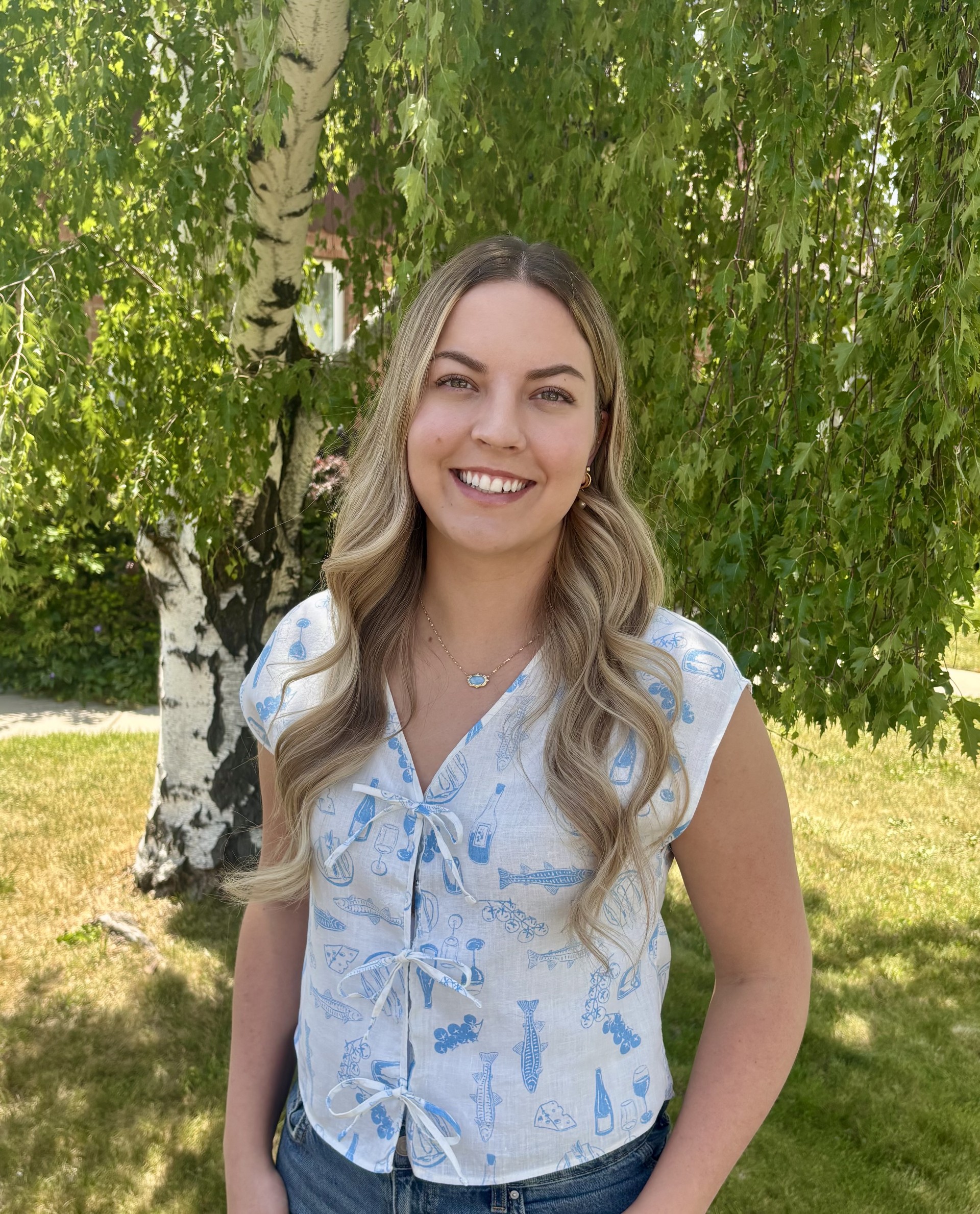
I am a Ph.D. candidate in Mathematics at Brigham Young University, studying several complex variables under the supervision of Professor Jennifer Brooks. My research focuses on invariant CR mappings and proper holomorphic maps between spheres and hyperquadrics.
I am also passionate about undergraduate mathematics education and designing interactive learning experiences that help students build conceptual understanding and become confident, independent problem solvers.
About Me
I grew up in Queensland, Australia before moving to the United States to pursue graduate studies at BYU, where I enjoy finding ways to communicate complex ideas through clear explanations, visual design, and active learning.
Outside of mathematics, I enjoy reading, baking, travelling, and sharing Australian culture with my students through a daily "Five Minutes of Australia" classroom tradition.
Fun Facts
🔆 Originally from the Sunshine Coast, Queensland, Australia.
🏐 Member of the 2022 Australian UniSport Nationals Division I Championship volleyball team.
🦔 Proud owner of a pet hedgehog named Pickles.
Teaching Snapshot
I believe students learn mathematics most effectively when they understand why ideas work. My teaching emphasizes conceptual understanding, active learning, and visual problem-solving through guided lecture notes, collaborative reviews, and mathematical decision roadmaps.
Research Snapshot
My research lies in several complex variables and CR geometry, with particular focus on:
June 2026:
Invited participant at the 2026 Collaborative Workshop in Several Complex Variables
at the Institute for Advanced Study in Princeton
Summer 2026:
Instructor of Record for MATH 213 (Elementary Linear Algebra)
Teaching Portfolio
My goal as an instructor is to help students develop a deep
conceptual understanding of mathematics while becoming confident,
independent problem solvers. I strive to create a classroom where
students actively engage with ideas, explain their reasoning, and
recognize connections between concepts rather than relying on
memorized procedures.
To support this, I design active and collaborative learning
activities, guided lecture notes, visual problem-solving roadmaps,
and review materials that help students organize their thinking,
communicate mathematical ideas, and develop effective mathematical
decision-making skills.
Below is a sampling of materials across Precalculus, Calculus I and II, and
Linear Algebra.
All materials on this page—including my customizable LaTeX
lecture note template—are freely available to download, adapt,
or modify for non-commercial educational use.
Active & Collaborative Learning
I design activities that ask students to
talk about mathematics, make decisions, and explain their
reasoning to one another. These activities give students
opportunities to practice choosing appropriate methods, compare
approaches, and learn from their peers while I circulate to listen,
ask questions, and address misconceptions.
Integration Heads Up — MATH 113, Calculus II
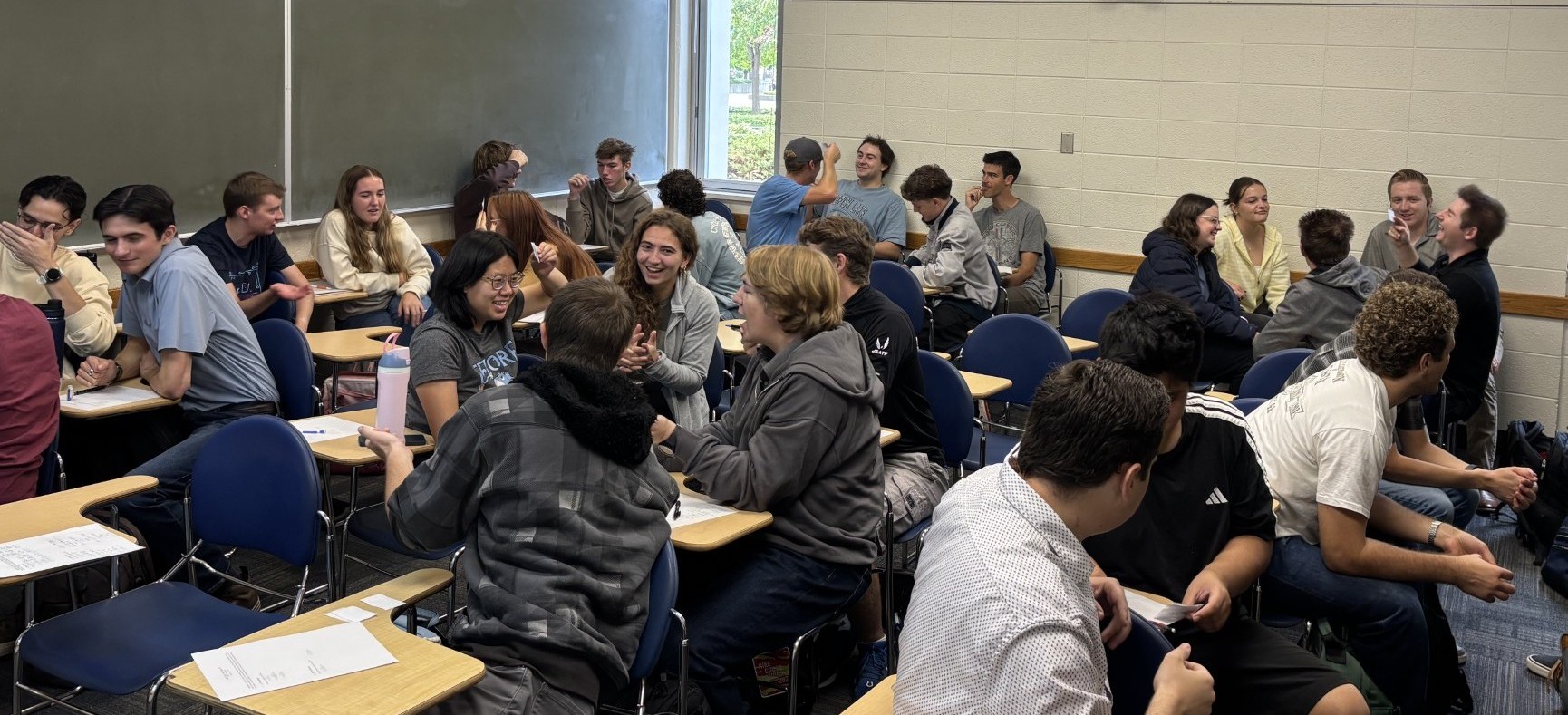
For an exam review, I adapted the game Heads Up to help
students practice recognizing and explaining major integration
techniques. Students work in groups of four and take turns
identifying a concept from their teammates' clues.
MATH 113 students working in small groups during
Integration Heads Up, a collaborative exam-review
activity.
Find Your Integration Partner — MATH 113, Calculus II
To introduce integration by parts in recitation, I designed a
matching activity in which each student receives either an
integral or a corresponding choice of
u and dv and must find the
student with the matching card. Partners then justify their match,
compute du and v, and predict what will happen
after applying integration by parts.
Students keep these partners for a collaborative worksheet that
progresses from definite integrals to repeated integration by
parts and cases in which the original integral reappears. Pairs
then compare solutions and explain their reasoning to one another.
The activity is designed to shift attention from simply applying
a formula to choosing a productive setup and anticipating
the structure of the resulting integral.
Supporting Concept Review:
Before beginning the activity, students use a short review
sheet to recall where the integration-by-parts formula comes
from, practice choosing u and dv, and
consider whether the resulting integral is actually simpler.
Rather than holding a traditional instructor-led review session,
I prepare students for exams through
collaborative blackboard review activities.
Students work together at topic-based stations to explain ideas,
solve problems, and learn from one another while I circulate to
provide targeted guidance and address misconceptions.
"In every class we would get some problems to try on our own and
then be given the opportunity to work with classmates. It's super
effective because it gives the chance to learn from others and to
explain to them the things I'm learning too."
I design structured, fill-in lecture notes that provide students with
an organizational framework while leaving space for key definitions,
reasoning, examples, and problem solving to be developed together
during class. The consistent structure allows students to focus more
attention on mathematical ideas and less on copying material from the
board.
"I found that [the lecture notes] allowed me to focus on understanding
and contemplating the material in class instead of worrying about
writing it all down."
I aim to carry the same sense of curiosity and engagement from the
classroom into assessment. When appropriate, I write problems with
playful or memorable contexts while preserving the mathematical content
I want students to demonstrate. For example, on this MATH 109 final exam,
students apply right-triangle trigonometry to determine the height of a
dragon flying above a villager from observations made by a guard standing
on a castle tower. The setting is lighthearted, but the problem still
requires students to interpret a diagram, construct the relevant
triangles, select appropriate trigonometric relationships, and
communicate a complete solution.
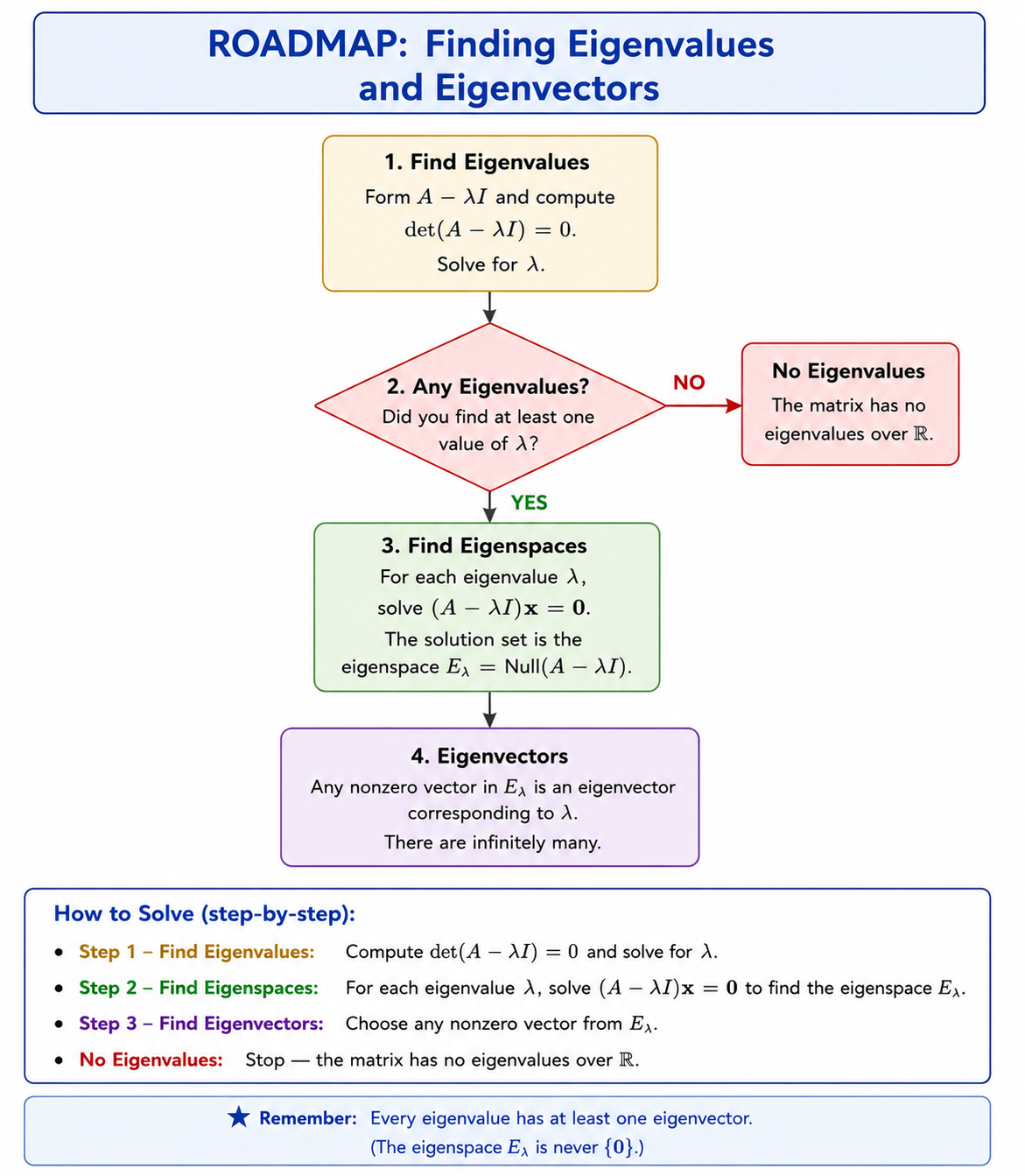
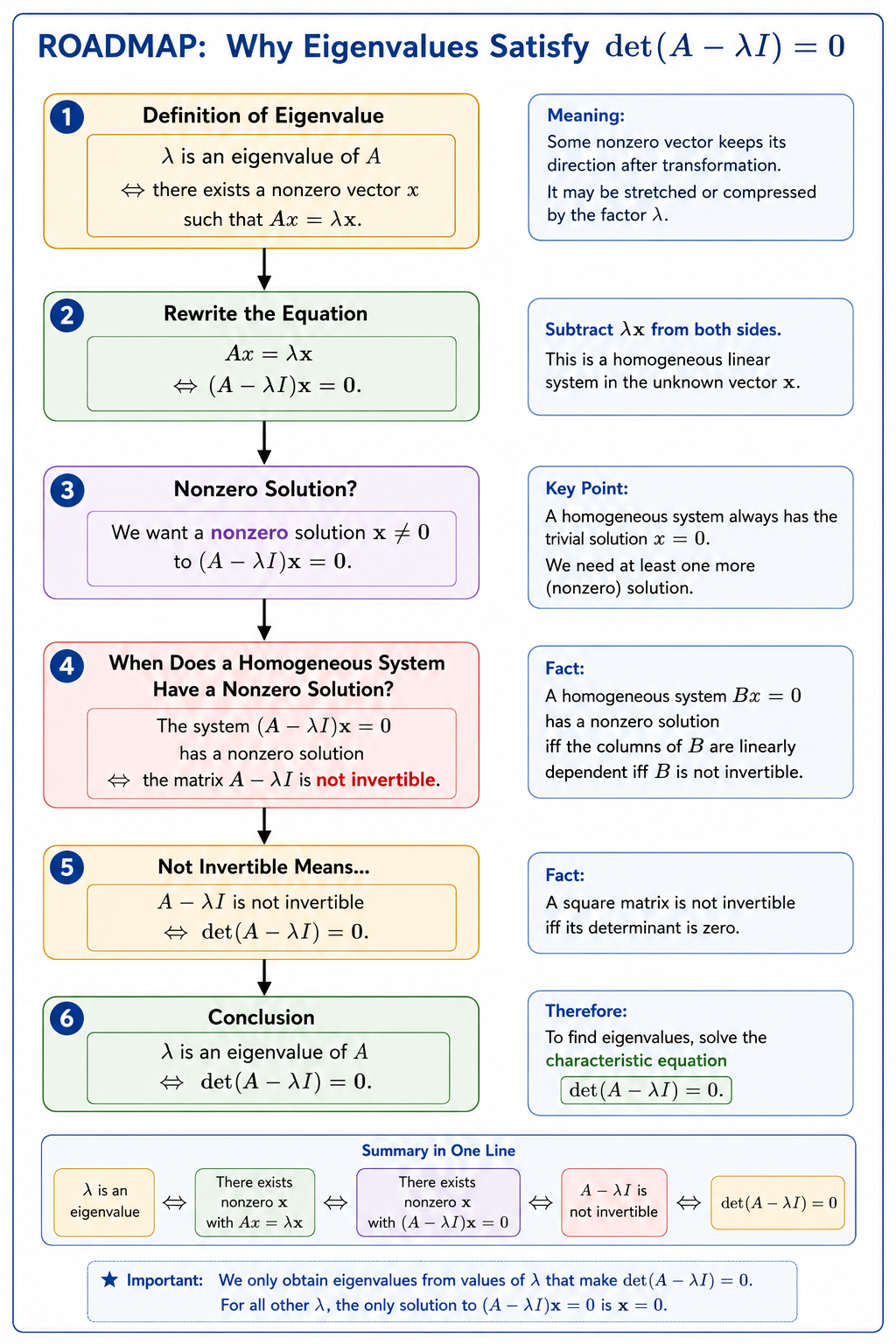
One challenge students often face is deciding what to do next when
solving a problem. To support independent problem solving, I design
visual decision roadmaps that organize common
solution strategies into clear, step-by-step processes. Rather than
memorizing isolated procedures, students learn to recognize the
structure of a problem and choose an appropriate solution path.
Eigenvalues & Eigenvectors Roadmap
Step-by-step visual flowchart for finding eigenvalues and
eigenvectors.
Eigenvalues Roadmap
Step-by-step visual explaining why we find eigenvalues
the way we do.
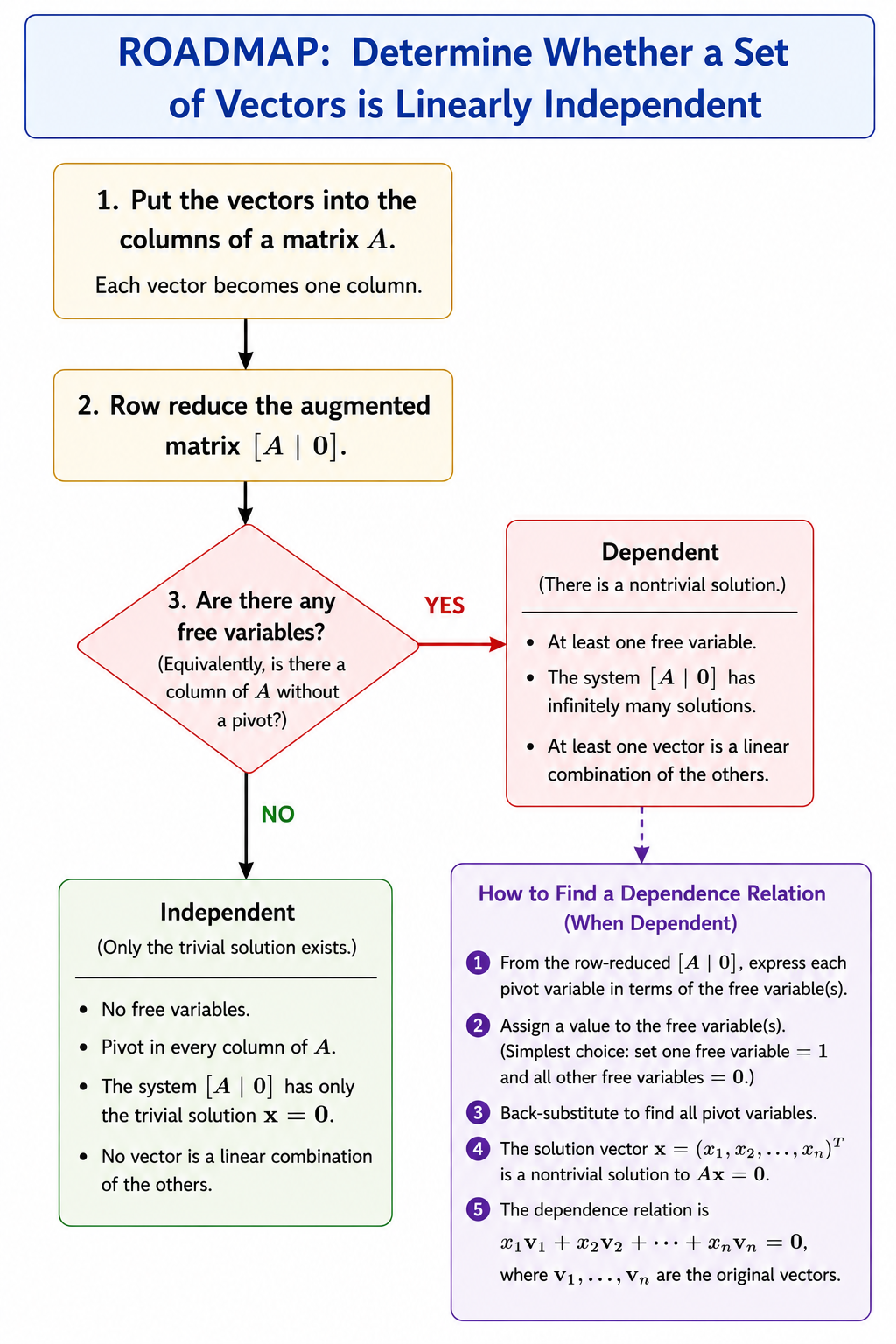
Linear Independence Roadmap
Step-by-step visual flowchart for deciding whether a set
of vectors is linearly independent.
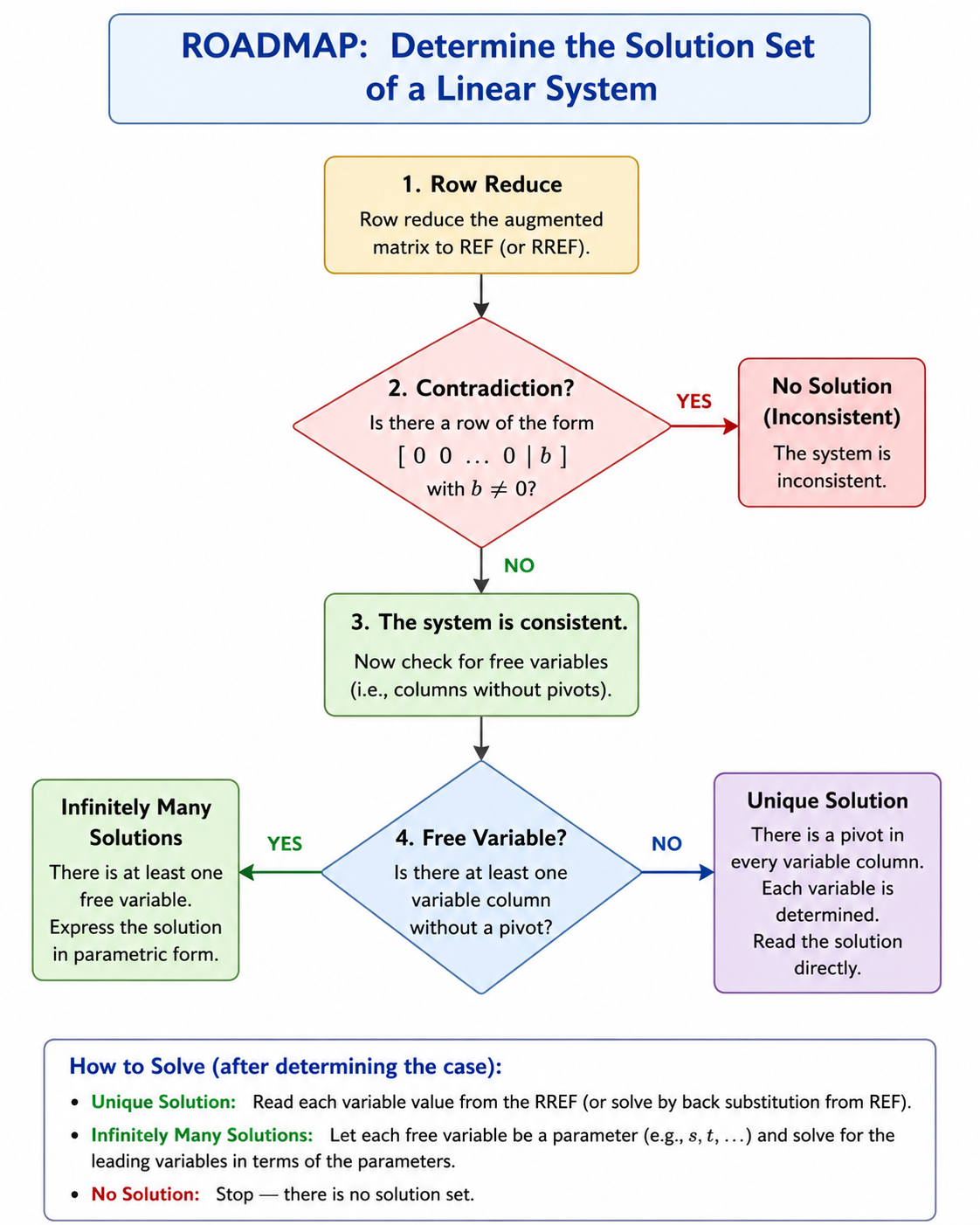
Solving Systems Roadmap
Visual decision tree for finding the solution to a system
of linear equations.
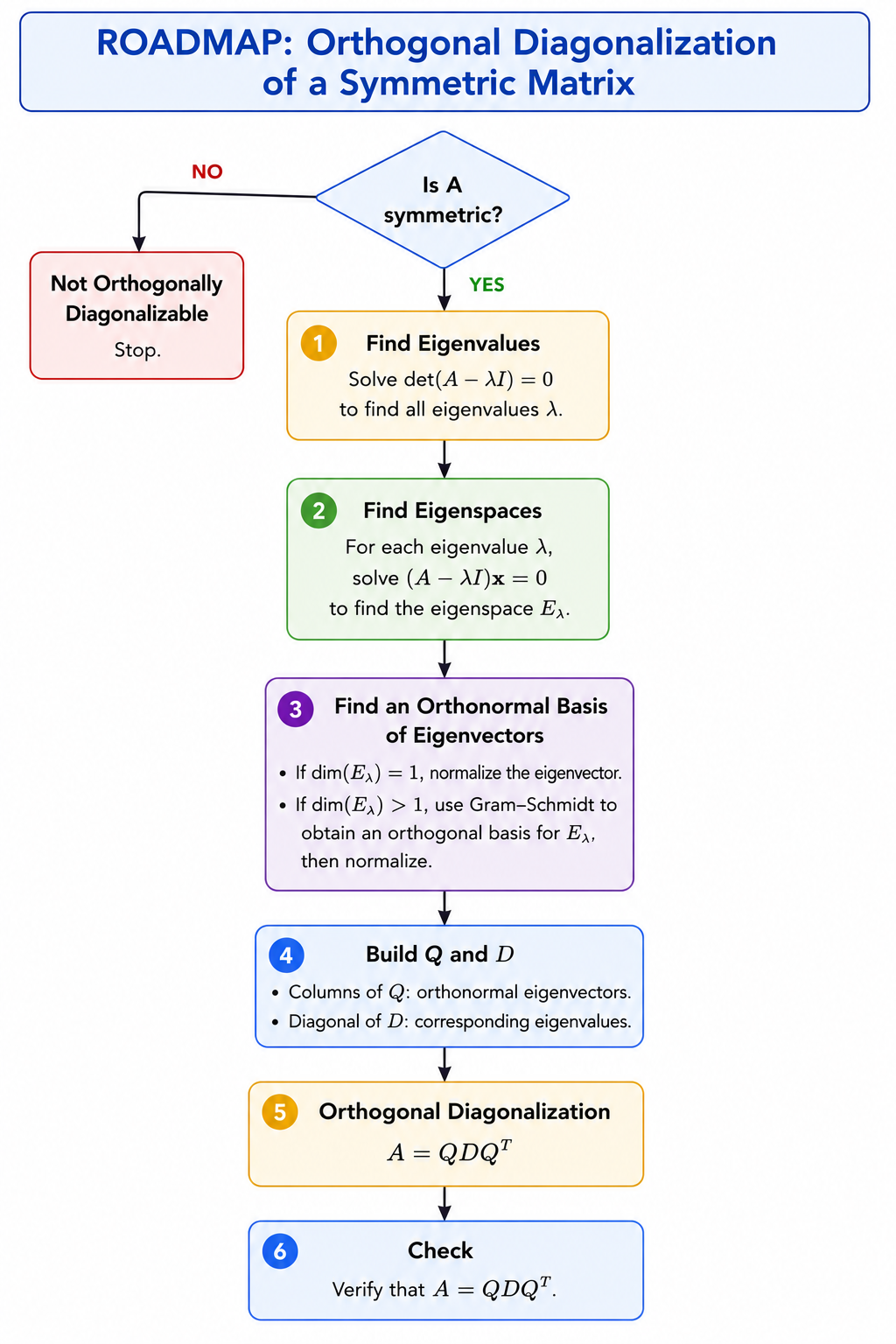
Orthogonal Diagonalization Roadmap
Step-by-step visual flowchart for computing an orthogonal
diagonalization of a real symmetric matrix.
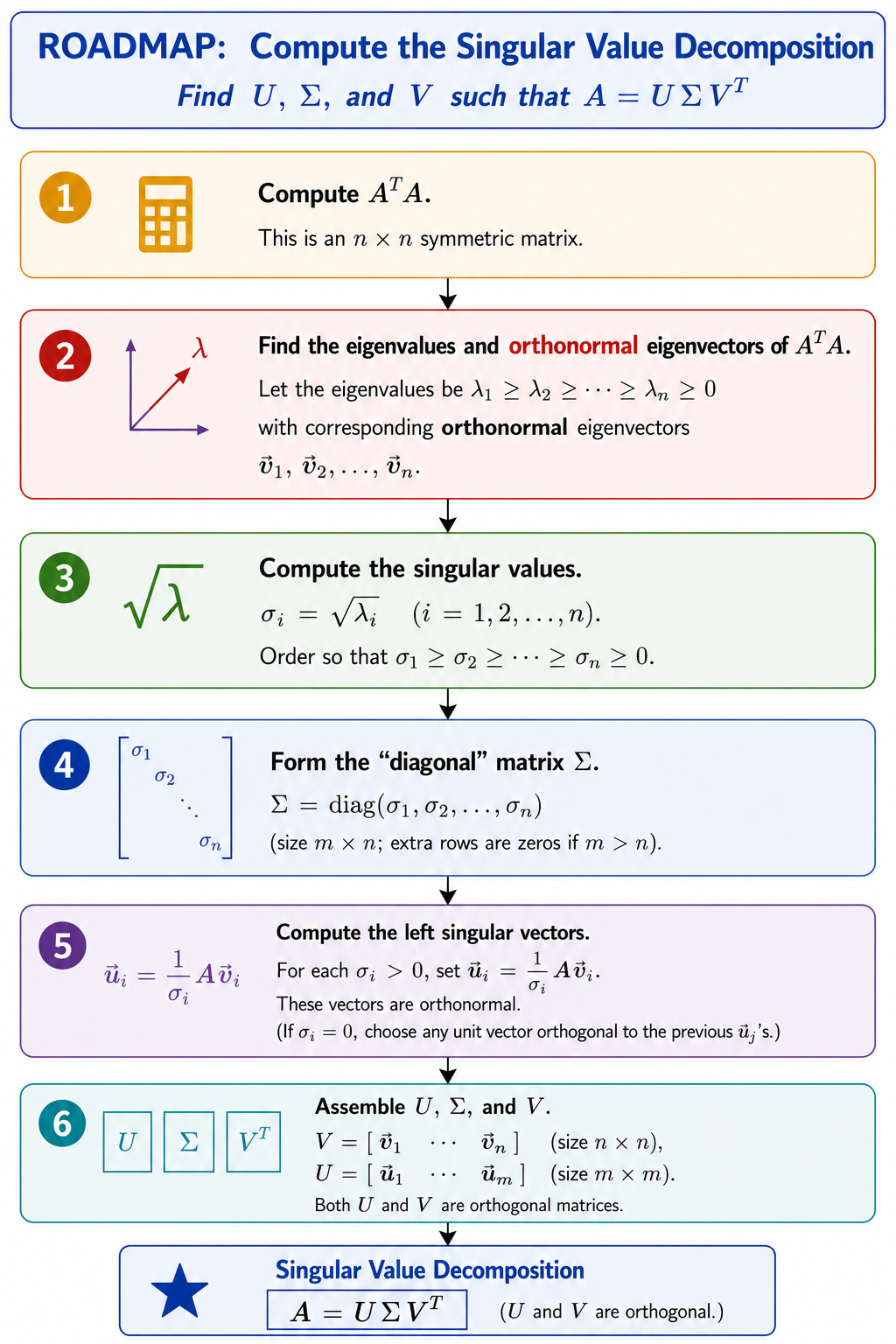
Singular Value Decomposition Roadmap
Step-by-step flowchart for computing a singular value
decomposition for general matrices.
Design note: Roadmap content and instructional structure
were developed by me, with generative AI used as a visual design tool.
Classroom Community
Building classroom community is just as important as building
mathematical understanding.
I use the first few minutes of class for low-stakes conversation that
helps students get to know me and one another. Question of the Day and
Five Minutes of Australia are two routines I use to build a welcoming
classroom community in which conversation and participation feel
natural.
"She made class more fun by doing little things like Australian facts
of the day and icebreaker questions for us to discuss before class
starts. I really enjoyed that, because it made it feel easier to
interact with both her and my peers!"
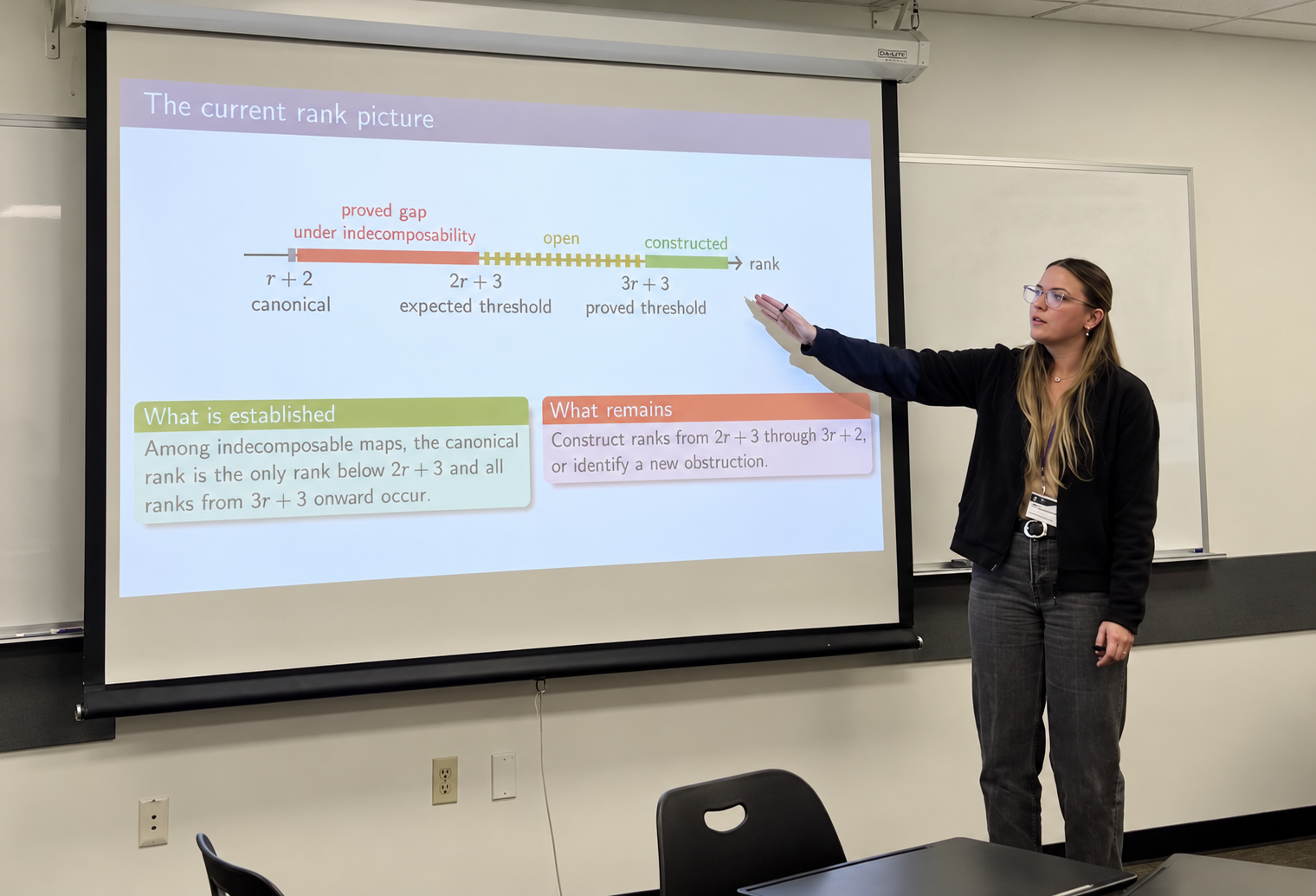
Presenting at the Math of Montana Conference,
Bozeman, October 2026.
My research lies in Several Complex Variables (SCV) and CR Geometry,
under the supervision of Professor Jennifer Brooks at Brigham Young
University. I am broadly interested in proper holomorphic and CR
mappings between complex domains, particularly the role that symmetry
plays in determining their geometric and algebraic properties.
My current research investigates group-invariant maps from complex
spheres to hyperquadrics, with a particular focus on understanding
which target hyperquadrics admit such maps and constructing sharp
examples that realize lower bounds. To study these questions, I
combine techniques from complex analysis, algebra, and computational
mathematics.
Prior to beginning my Ph.D., my honours research at the University
of the Sunshine Coast was in radical theory, where I used class
operators to develop a new interpretation of results concerning
the base-semisimple class.
I value collaborative research and enjoy working with others to
combine different perspectives and techniques. If your research
interests overlap with mine, I would be delighted to connect and
discuss potential collaborations.
Research at a Glance
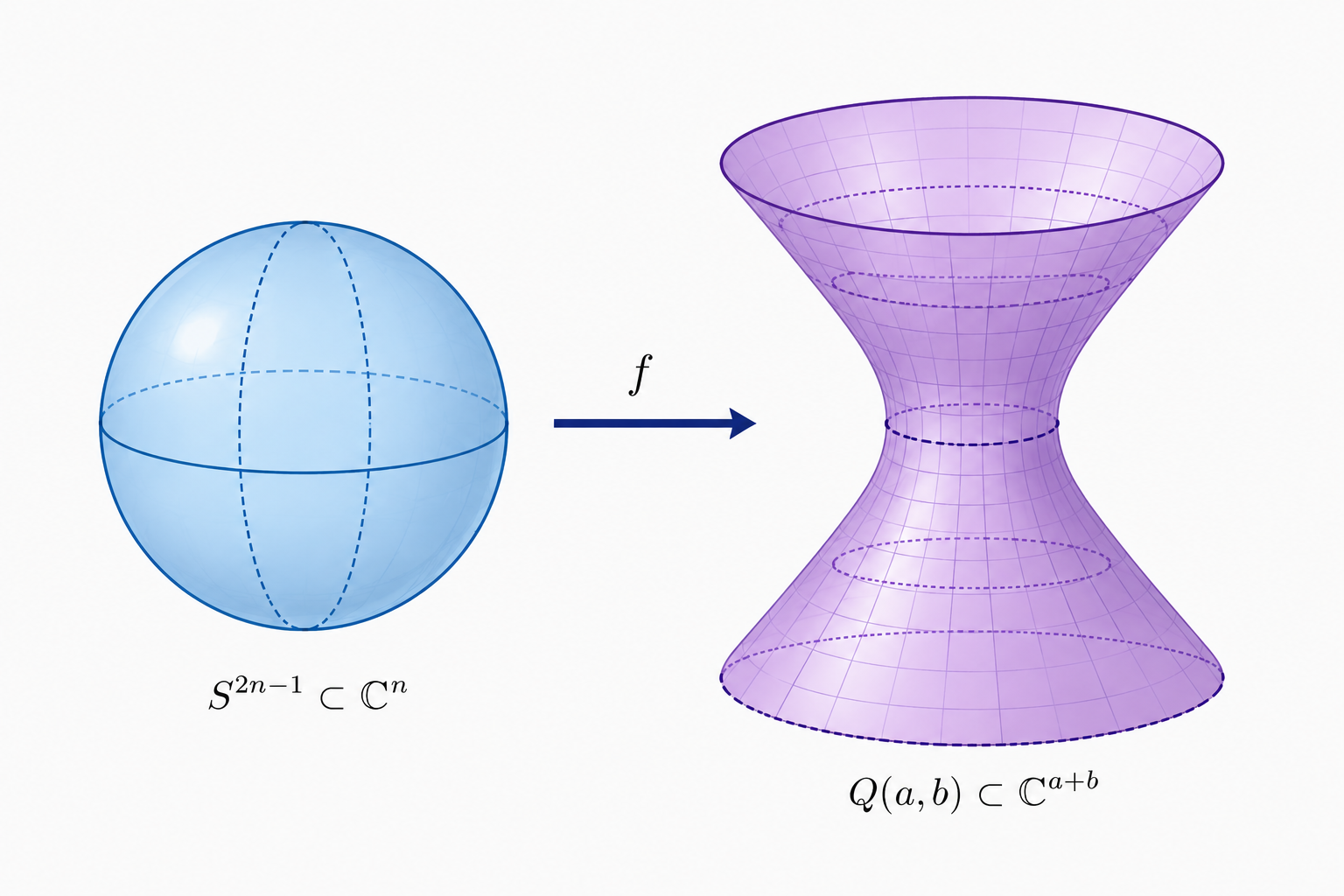
Group-invariant CR maps send complex spheres into hyperquadrics. Much of my research focuses on understanding when such maps exist and determining which target hyperquadrics can occur.
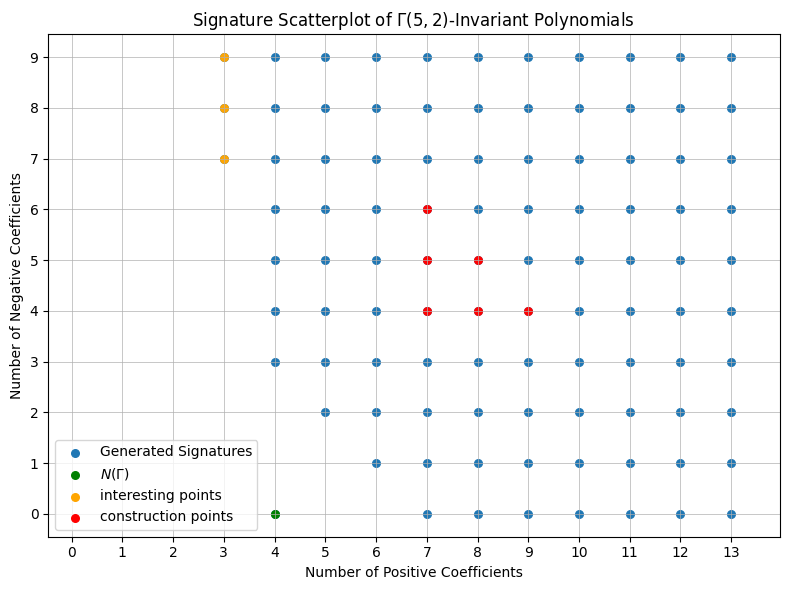
Since each signature corresponds to a target hyperquadric, these plots provide a visual way to organize known constructions, reveal patterns, and identify examples.
Research Interests
Several Complex VariablesCR GeometryProper Holomorphic MappingsInvariant CR MapsSphere and Hyperquadric Maps
Current Projects
Lower Bounds for Invariant CR Maps
Jennifer Brooks, Eden Danielsen-Jensen, Dusty Grundmeier, Alex Lee
In preparation
We investigate lower bounds for group-invariant CR maps between spheres and hyperquadrics. By reformulating the problem in terms of invariant polynomials, their signatures, and associated positive matrices, we develop a new approach to proving sharp lower bounds relating the degree of the map to the target dimension.
Ranks and Signatures for Group-Invariant Polynomials
Jennifer Brooks, Eden Danielsen-Jensen, Dusty Grundmeier, Alex Lee
In preparation
We study the ranks and signatures of group-invariant polynomials, constructing a broad region of attainable signatures and identifying several families of low-rank examples.
Degree-Three Rational Sphere Maps: Sharp Denominator Region and Gram Normal Forms
Eden Danielsen-Jensen, Dusty Grundmeier, Abdullah Al Helal, Valentin Kunz, Jiří Lebl, Ming Xiao, Weixia Zhu
We study degree-three rational sphere maps between complex unit balls. Using Gram matrix techniques, we characterize exactly which normalized quadratic denominators admit sphere maps, develop canonical Gram normal forms, and describe the corresponding moduli space.
Presentations
🔍 Expand / Fullscreen
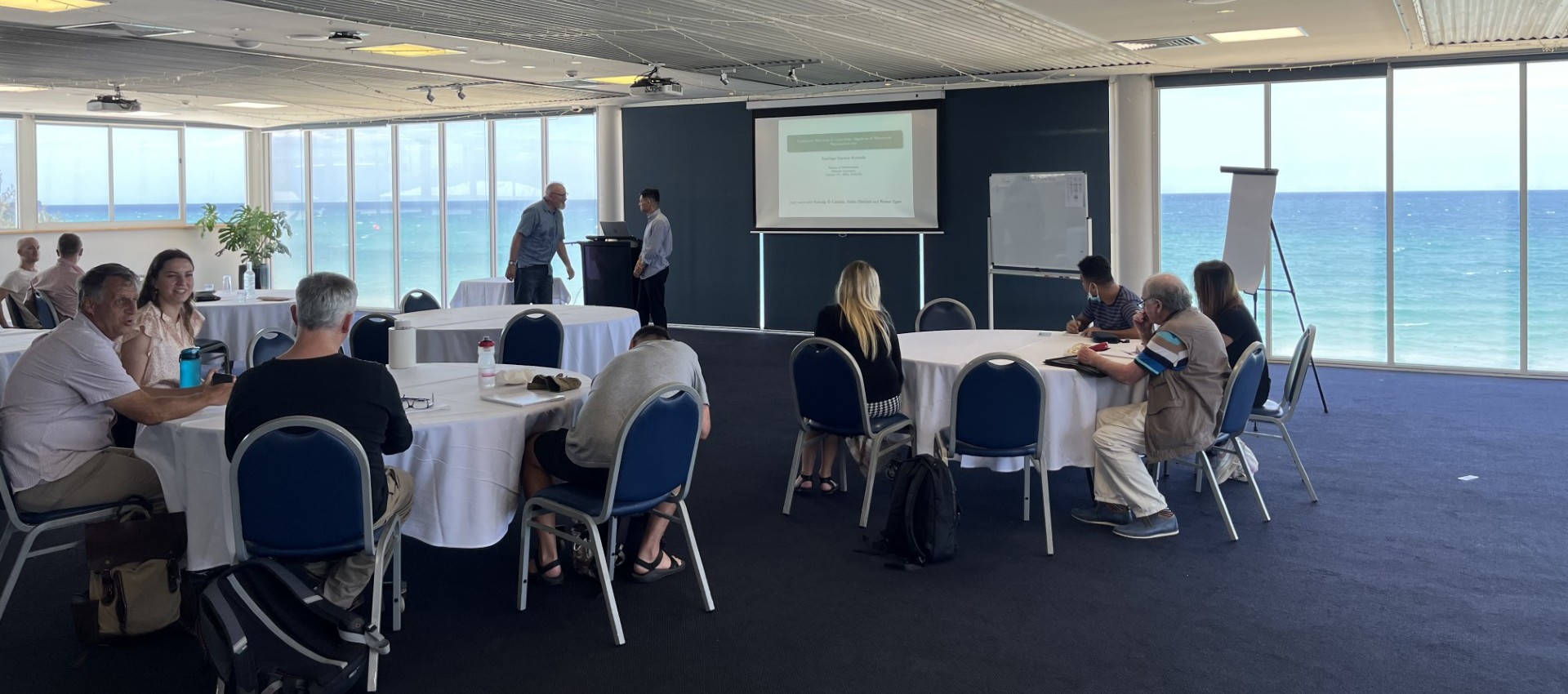
Math of Montana Conference, Bozeman, October 2026.
Several Complex Variables
Existence and Nonexistence of Group-Invariant Maps from Spheres to Hyperquadrics
Math of Montana Conference, Bozeman, MT, October 2026
Signatures for Group-Invariant Monomial Maps from Spheres to Hyperquadrics
MAA Intermountain Section Meeting, Provo, UT, March 2026
BYU Student Research Conference, Provo, UT, February 2026
Joint Mathematics Meetings (JMM), Washington, DC, January 2026
Algebra
A Revised Introduction for the Base Semisimple Class
Australian Algebra Conference, Sunshine Coast, QLD, December 2022
Australian Mathematical Society Conference, Sydney, NSW, December 2022
Research Activities & Workshops
Collaborative Research Workshop in Several Complex Variables
Institute for Advanced Study (IAS), Princeton, NJ
June 2026
🔍 Expand / Fullscreen
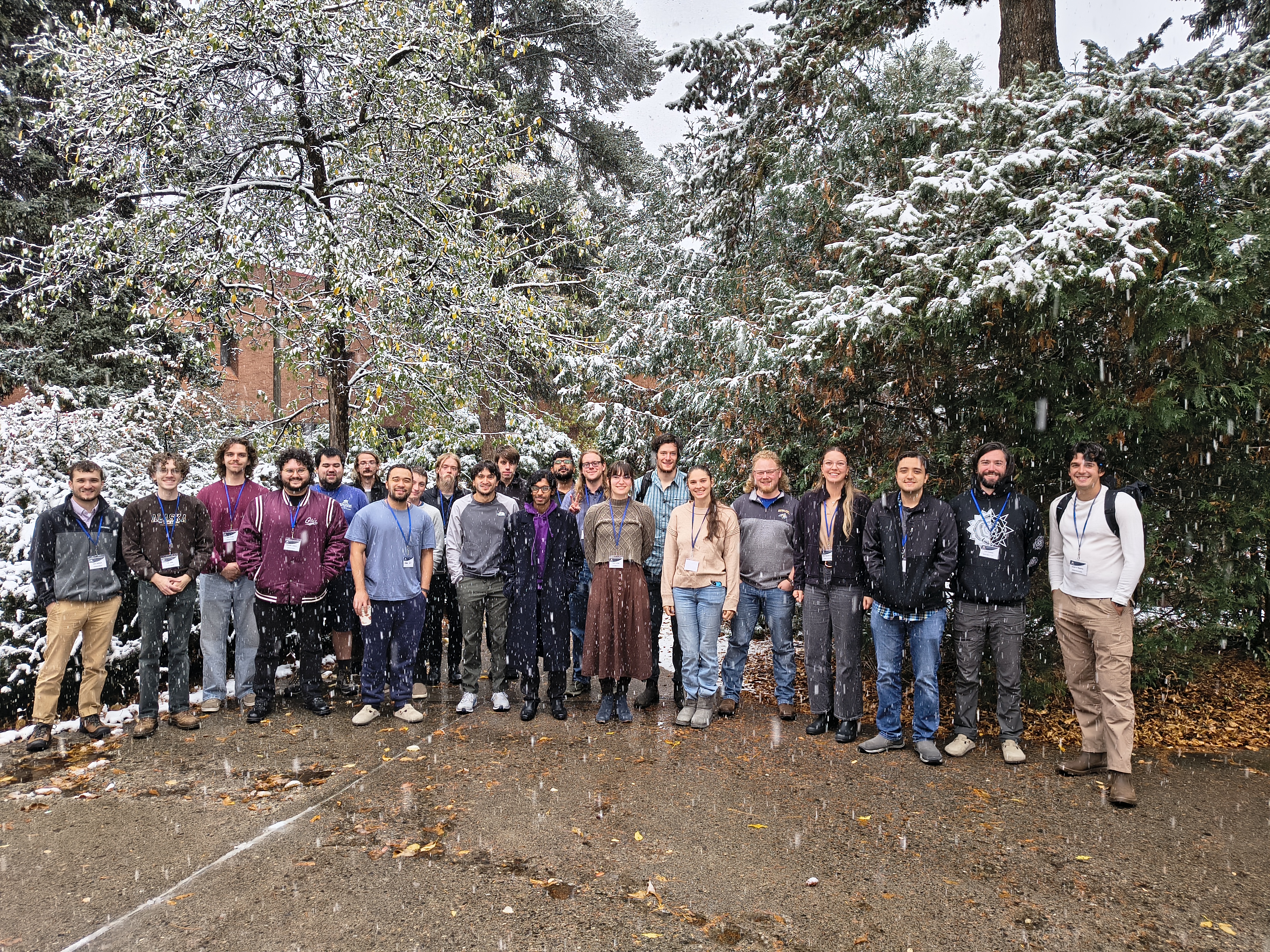
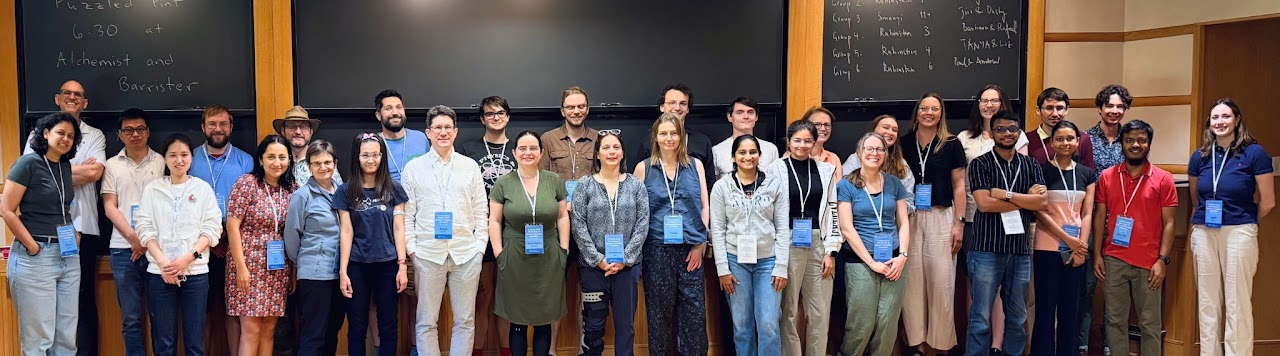
Participants in the Collaborative Research Workshop in Several Complex Variables, Institute for Advanced Study (IAS), Princeton, 2026.
Service & Outreach
I contribute to the mathematical community through departmental
and graduate student leadership, teaching and professional
development, mentoring, and professional service. I particularly
value opportunities to build community, support student success,
and create resources and programs that help students develop as
mathematicians, teachers, and professionals.
Departmental & Graduate Leadership
Assistant Director, Women in Math
Brigham Young University Department of Mathematics
2026–Present
Help lead Women in Math within the department by organizing events and initiatives that strengthen community, support professional development, and connect students and faculty.
Organized a departmental seminar on
Imposter Syndrome in Mathematics, bringing students
and faculty together for a conversation about navigating imposter
syndrome in academic mathematics.
Coordinate a weekly Women in Math lunch, providing
an informal space for students to connect, build friendships, and
strengthen community within the department.
Assist with event planning, communication, scheduling, and other
administrative responsibilities for Women in Math.
Graduate Student Cohort Representative
Brigham Young University Department of Mathematics
2024–Present
Represent the mathematics graduate student cohort and develop
initiatives that support graduate student professional
development, research progress, and community.
Communicate graduate student feedback, concerns, and
suggestions to the department.
Founded and organize a
graduate student writing group that provides
regular accountability and peer support for research writing.
Organized a professional development workshop on
building an academic website, helping
graduate students develop an online professional presence
and showcase their research, teaching, and academic work.
Organize graduate student community-building activities,
including events for incoming students and graduate student game nights.
Teaching & Professional Development
Invited Speaker, Graduate TA Training
Brigham Young University Department of Mathematics
2026
Invited to speak during departmental TA training for incoming
mathematics graduate students on
building rapport with students in the classroom.
Shared practical strategies for creating a welcoming classroom
environment, encouraging student participation, and developing
productive instructor–student relationships.
Student Outreach & Mentoring
Graduate School Panelist
Brigham Young University Mathematics
2025–Present
Serve as an invited panelist for graduate-school information sessions for undergraduate mathematics students, sharing experiences and answering questions about preparing for and applying to graduate school, choosing programs, research, teaching, and graduate student life.
Mathematics Support Sessions
University of the Sunshine Coast
2023
Created and facilitated supplementary support sessions for
first-year mathematics students with varying levels of
preparation, helping students strengthen foundational skills,
develop effective problem-solving strategies, and build
confidence in engaging with university mathematics.
Professional Service
Australian Algebra Conference — Conference Organization
2022
Assisted with the organization and delivery of the Australian
Algebra Conference, supporting conference logistics and
participant coordination.